Category: Uncategorized

  • SANS 1589:1994 vs SANS 1589:2022 – Understanding the Evolution of Mining Brake Safety

    closer look at the updated braking standards and what they mean for underground mining equipment.

    Safety is one of the most critical considerations in underground mining operations. With heavy mobile machinery operating in demanding environments, reliable braking systems are essential to protecting operators, equipment and everyone working underground.

    The introduction of SANS 1589:2022 represents an important development in the approach to braking-system design, performance and testing for underground trackless mobile machinery (TMMs).

    But what has changed between the original SANS 1589:1994 and the updated SANS 1589:2022?

    1. Understanding the Difference Between the Two Standards

    The earlier SANS 1589:1994 standard primarily focused on braking-performance specifications, particularly for Load-Haul-Dump (LHD) machines and dump trucks.

    The updated SANS 1589:2022 takes a broader and more comprehensive approach, addressing the complete braking system, including design, performance, testing and safety considerations.

    Some of the key developments include:

    • Broader machine coverage: More comprehensive consideration of underground trackless mobile machinery.
    • Improved structure: The updated standard is divided into Parts 1, 2 and 3.
    • Clearer separation of testing: Design compliance testing and in-service brake testing are more clearly distinguished.
    • Modern machine technology: Greater consideration of modern TMM configurations and hydrostatic machines.
    • International alignment: Improved alignment with international standards and approaches, including ISO 19296 and ISO 3450.
    • Fail-safe philosophy: Greater emphasis on system-level safety and braking reliability.
    • Brake-system architecture: More detailed consideration of system design, controls, energy sources and failure modes.

    These developments reflect the increasing complexity of modern underground mining equipment and the need for a more comprehensive approach to braking safety.

    2. The Importance of Independent Service and Emergency Braking

    One of the most important considerations in mining brake safety is the relationship between the service brake and the emergency or parking brake.

    These braking functions serve different purposes and must provide the required safety performance.

    However, an important engineering consideration arises when both braking functions rely on the same set of friction plates.

    If the service brake and emergency brake share common friction plates, those components represent a common failure point.

    For example, if the friction plates experience structural failure, excessive wear, loss of friction material or an inability to transmit braking torque, both braking functions may be affected simultaneously.

    Even where the service and emergency brakes have separate actuators or hydraulic circuits, shared friction components can compromise their independence.

    This is why braking-system design must consider more than simply having two separate braking functions.

    True braking-system reliability requires careful consideration of common components and potential failure points.

    3. Why Common-Component Failure Matters

    An emergency braking system should provide the necessary braking capability when the service braking function is unavailable or compromised.

    However, if both systems depend on the same critical friction components, the emergency brake may not provide genuinely independent braking capability when those components fail.

    A useful engineering principle is:

    “Where the service and emergency braking functions rely on a common set of friction plates, failure of those friction plates constitutes a common-cause failure capable of resulting in loss of both service and emergency braking.”

    This highlights the importance of assessing the complete braking architecture, rather than evaluating individual braking functions in isolation.

    The actual compliance of a braking arrangement must always be assessed against the applicable requirements of the standard and the specific machine design.

    4. What Does This Mean for Mining Operations?

    For mine operators, equipment manufacturers and maintenance teams, the move towards SANS 1589:2022 highlights the importance of:

    • Ensuring braking systems are correctly designed for their intended application.
    • Understanding the relationship between service, emergency and parking braking functions.
    • Identifying common failure points within braking systems.
    • Conducting appropriate design compliance and in-service testing.
    • Ensuring braking-system reliability throughout the machine’s operational life.
    • Keeping equipment aligned with applicable safety standards and regulatory requirements.

    Braking safety should never be viewed as a single component or isolated function. It is the result of a properly designed, integrated and maintained system.

    5. Moving Towards Safer Mining Equipment

    The transition from SANS 1589:1994 to SANS 1589:2022 represents a more comprehensive approach to braking-system safety in underground mining.

    As mining equipment becomes more advanced, braking systems must evolve accordingly. Understanding the updated requirements, identifying potential system weaknesses and ensuring appropriate testing are essential steps towards safer and more reliable mining operations.

    At AIM Equipment, we understand the importance of dependable braking solutions and safety-focused equipment for the mining industry.

    A safer mine starts with reliable equipment and braking systems designed with safety in mind.

    For more information about AIM Equipment’s mining solutions, contact our team.

    AIM Equipment

    Technical note: This article provides a general overview based on the SANS 1589:1994 and SANS 1589:2022 comparison material and associated engineering discussion. It is not a substitute for the official standards, a formal compliance assessment or professional engineering advice.
  • EMERST Level 9: Advancing Collision Avoidance in Mining

    Advanced Safety Solutions for Trackless Mobile Machines (TMMs)

    Safety remains one of the most important priorities in the mining industry. As mining operations become increasingly advanced, the need for intelligent safety systems that protect workers, equipment, and infrastructure continues to grow.

    EMERST Level 9 represents an advanced approach to collision avoidance for Trackless Mobile Machines (TMMs), focusing on autonomous risk assessment, proactive collision prevention, and intelligent decision-making. These technologies aim to reduce the risk of vehicle-related incidents while supporting safer and more efficient mining operations.

    Understanding EMERST Levels in Mining

    EMERST levels describe stages of collision avoidance technology, with higher levels generally incorporating more advanced automation and intervention capabilities. The exact requirements depend on the applicable mining regulations and technical standards.

    • Level 5: Basic operator assistance and limited automated intervention.
    • Level 7: More advanced assistance, with automated responses and operator override capabilities.
    • Level 9: Advanced autonomous collision avoidance, allowing the system to assess potential hazards and initiate appropriate corrective actions with minimal operator input.

    The key distinction of Level 9 is its emphasis on proactive safety. Rather than relying solely on operator awareness or warnings, the system aims to identify potential collision risks and intervene before an incident occurs.

    Key Features of EMERST Level 9

    1. Proactive Collision Avoidance

    Advanced collision avoidance systems continuously monitor the operating environment to identify potential hazards. When a collision risk is detected, the system can initiate appropriate responses, such as warning the operator, limiting vehicle movement, or activating braking, depending on the system’s capabilities and configuration.

    2. Autonomous Decision-Making

    Level 9 systems can assess detected hazards and determine suitable corrective actions without relying entirely on manual intervention. This capability is particularly valuable in complex mining environments where reaction time, visibility, and operating space may be limited.

    3. Advanced Sensor Integration

    Depending on the system design, technologies such as radar, LiDAR, cameras, proximity sensors, and positioning systems can provide information about surrounding vehicles, pedestrians, and obstacles.

    Combining multiple data sources can improve situational awareness and help address blind spots in challenging underground and surface mining environments.

    4. Pedestrian Protection

    Protecting workers around moving machinery is a critical component of mining safety. Advanced detection systems can identify pedestrians through direct sensing technologies or compatible wearable devices.

    When a potential collision is detected, the system can provide warnings or trigger configured interventions to help reduce the risk of vehicle-to-person incidents.

    5. Vehicle-to-Vehicle and Site-Wide Communication

    Communication between compatible machines and central control systems can improve awareness of vehicle positions, movements, and potential hazards. This information can support safer traffic management, particularly in confined underground workings, intersections, loading areas, and busy haul routes.

    Applications Across Mining Operations

    Underground Mining

    Underground mines present unique safety challenges, including narrow tunnels, restricted visibility, limited manoeuvring space, and frequent interaction between machinery and personnel.

    Advanced collision avoidance systems can help manage interactions between TMMs, identify potential hazards, and support safer movement through confined working areas.

    Open-Pit Mining

    Open-pit operations involve large machinery, extensive haul roads, intersections, and loading and dumping zones. Collision avoidance technology can help monitor vehicle proximity, identify potential conflict points, and support safer traffic movement.

    Pedestrian and Personnel Protection

    Workers frequently operate near mobile equipment during inspections, maintenance, loading, and other mining activities. Intelligent detection and warning systems can help improve operator awareness and reduce exposure to moving machinery.

    The Benefits of Advanced Collision Avoidance

    Enhanced Safety

    By identifying potential hazards and supporting timely intervention, advanced collision avoidance technology can help reduce the risk of accidents associated with blind spots, operator fatigue, restricted visibility, and human error.

    Improved Operational Efficiency

    Collision-related incidents can result in costly downtime, equipment damage, and operational delays. Preventative safety systems can support more consistent operations and help minimise avoidable disruptions.

    Support for Regulatory Compliance

    Mining operations must comply with applicable health, safety, and machinery requirements. Collision avoidance technology can form part of a broader risk-management strategy designed to support these obligations.

    Relevant standards, including ISO 21815 for earth-moving machinery collision warning and avoidance systems, may be applicable depending on the equipment and operating environment. Compliance must be verified against the specific standard requirements and the system’s certification.

    Better Traffic and Fleet Management

    When integrated with compatible monitoring and control systems, collision avoidance technology can contribute to improved vehicle coordination, traffic management, and operational planning across mining sites.

    Challenges and Implementation Considerations

    Although advanced collision avoidance offers significant potential benefits, successful implementation requires careful planning.

    Environmental conditions: Dust, vibration, poor visibility, moisture, and extreme temperatures can affect sensor performance. Systems must be selected and configured for the intended mining environment.

    System integration: Compatibility with existing machinery, control systems, and safety equipment must be assessed before implementation.

    Initial investment: Advanced systems can require substantial investment in hardware, software, installation, testing, and maintenance. These costs should be evaluated alongside potential safety and operational benefits.

    Testing and maintenance: Sensors, communication systems, and safety functions require appropriate inspection, validation, and maintenance to ensure reliable performance throughout their service life.

    The Future of Mining Safety

    The development of collision avoidance technology continues to move towards more intelligent, connected, and automated mining operations.

    Future advancements may include AI-assisted hazard prediction, improved sensor fusion, autonomous fleet coordination, stronger cybersecurity, and more effective human-machine interfaces.

    Although higher levels of automation may emerge, reliable safety engineering, appropriate human oversight, and compliance with applicable regulations will remain essential.

    Moving Towards Safer Mining Operations

    Advanced collision avoidance technology represents an important step towards reducing vehicle-related risks in mining. By combining intelligent detection, automated intervention, and improved communication, these systems can help mining operations create safer working environments while supporting productivity.

    For mining companies, the priority is to select solutions that are suitable for their equipment, operating conditions, and safety requirements.

    At AIM Equipment, we recognise the importance of reliable equipment and advanced safety integration in demanding mining environments. As the industry continues to evolve, robust engineering and effective safety technologies will remain central to building safer, more efficient mining operations.

    Disclaimer: EMERST level definitions and system capabilities should be verified against the applicable regulatory framework, technical specifications, and manufacturer documentation before being used to make compliance or certification claims.

  • Tier 4 Flameproofing Compliance: Advanced Emission Control

    Cleaner Emissions. Safer Operations. Proven Engineering.

    Diesel-powered machinery remains essential to underground mining operations, but managing exhaust emissions and surface temperatures is critical in these demanding environments. As emission requirements become more stringent, mining companies need solutions that balance engine performance, emission control and the safety requirements of underground operations.

    At AIM Equipment, we make advanced engineering technology available to the mining industry through our patented Tier 3+ flameproof system, designed to address the challenges of operating modern diesel engines in fiery mine environments.

    The Challenge of Diesel Exhaust Emissions Underground

    Diesel exhaust emissions are a significant health concern in underground mines where diesel-powered machinery operates. Managing these emissions is therefore an important part of creating a safer working environment for mine personnel.

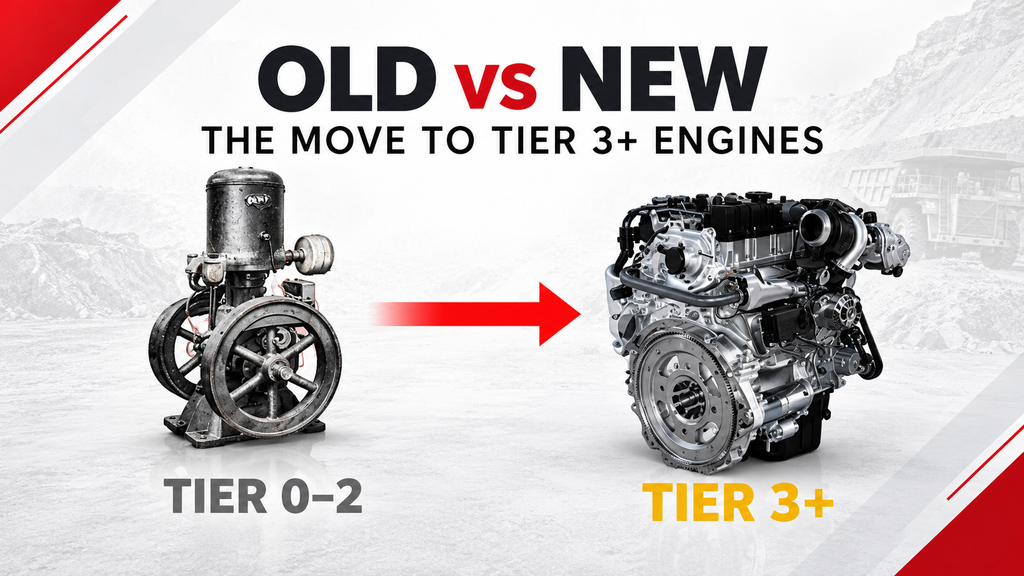
    Modern engines with Tier 3 emission levels or higher can help reduce regulated pollutant emissions compared with older Tier 0–2 engines. However, introducing these engines into underground mining environments presents additional engineering challenges.

    High exhaust temperatures, turbocharger temperatures and electrical components must be addressed as part of a properly engineered flameproofing solution.

    The challenge is not simply to reduce emissions. It is to integrate emission-control technology with the temperature-management and flameproofing requirements of underground mining.

    AIM’s Patented Tier 3+ Flameproof System

    AIM Equipment has developed a patented flameproofing system that incorporates specialized housings, cooling methods and adapted engine components to address the challenges associated with Tier 3+ diesel engines.

    The system is designed to manage external surface temperatures while allowing exhaust gases to remain hot enough for effective after-treatment operation.

    Key components include:

    • Intake flame arrestor
    • Turbocharger or supercharger housing
    • Charge cooler
    • Intake manifold
    • Exhaust manifold
    • Catalytic converter housing
    • Exhaust gas cooler
    • Exhaust flame arrestor
    • Exhaust pipe
    • Flameproof engine control module (ECM) enclosure
    • Hydraulically driven flameproof alternator

    Each component plays a role in the overall system design, helping address the thermal, electrical and exhaust-management challenges associated with underground diesel machinery.

    Managing Heat Without Compromising After-Treatment Performance

    One of the most important engineering challenges in diesel emission control is managing heat.

    Catalytic converters require sufficiently high exhaust-gas temperatures to operate effectively. Depending on the catalyst and operating conditions, typical operating temperatures may fall within approximately 250°C to 800°C.

    At the same time, underground mining equipment must meet applicable flameproofing and surface-temperature requirements.

    AIM’s approach uses specialized, water-cooled housings and an insulation-layer method to help reduce external surface temperatures while retaining the heat required within the exhaust system.

    This approach is particularly important around the turbocharger and catalytic converter assembly, where thermal management and after-treatment performance must work together.

    By addressing these requirements within an integrated system, AIM aims to support the use of modern emission-control technology in demanding underground mining applications.

    Flameproofing Engine Electrical Components

    Modern diesel engines rely on electronic control systems to manage engine operation and performance. In underground mining environments, these electrical components must be addressed as part of the flameproofing design.

    AIM’s system adapts engine electronics to meet the applicable flameproofing requirements while retaining the original engine electronic components, rather than relying on third-party or aftermarket replacements.

    The system also incorporates a hydraulically driven flameproof alternator as part of its specialized electrical arrangement.

    This integrated approach supports the objective of maintaining engine functionality while addressing the additional requirements of underground mining operations.

    Engineering for Demanding Mining Environments

    Flameproofing a modern diesel engine involves more than enclosing individual components. It requires careful consideration of exhaust temperatures, surface temperatures, electrical systems, component integration and the operating conditions in which the machinery will be used.

    AIM Equipment combines in-house engineering expertise with specialized system design to address these challenges.

    Our focus is on developing practical solutions that help mining customers access modern engine technology while taking account of the demanding requirements of underground operations.

    Partner with AIM Equipment

    The move towards lower diesel emissions requires engineering solutions that consider both emission-control performance and the realities of underground mining.

    AIM Equipment’s patented Tier 3+ flameproof system demonstrates our commitment to making advanced technology available to the mining industry.

    Looking for a flameproofing solution for your underground diesel equipment?

    Contact AIM Equipment to discuss your application and learn how our engineering team can assist with your equipment requirements.

    AIM Equipment (Pty) Ltd Phone: +27 13 665 2111 Email: aim@aimgroup.co.za Website: www.aimequipment.net

    Advanced engineering. Practical mining solutions. AIM Equipment.

  • AIM Equipment: Pioneering Safer Mining Through Advanced Failsafe Brake Systems

    Engineering Innovation for a Safer Mining Industry

    Safety has always been a driving force behind AIM Equipment’s commitment to engineering excellence. Since the early 2010s, AIM (B-BBEE Level 2) has invested significant resources into the design and development of advanced, SANS 1589-compliant brake systems, with the goal of creating safer machinery and protecting personnel in demanding mining environments.

    Through its in-house design office, AIM has developed innovative braking technology that works alongside Proximity Detection Systems (PDS) and Collision Avoidance Systems (CAS), helping the South African mining industry move towards safer and more intelligent machine operation.

    Following the successful testing and approval of its first system by Gerotek, AIM registered patents for its independent failsafe brake systems, controllers and designs, reinforcing its position as an innovator in mining safety technology.

    Transforming Trackless Mining Machinery

    Historically, diesel trackless mining machinery (TMM) was often basic in design, with some equipment adapted from agricultural tractors to meet the mining requirements of the time. As technology advanced, the need for more sophisticated, reliable and safety-focused machinery became increasingly clear.

    AIM has remained at the forefront of this development, contributing to the evolution of mining equipment through its FL-AIM-TRAX tractor series. These machines represent a new generation of mining technology, helping set higher standards for performance, safety and innovation in the South African mining sector.

    AIM Equipment Failsafe Emergency Brake Systems

    One of AIM’s most significant innovations is its range of failsafe emergency brake systems, engineered to meet the requirements of SANS 1589 and beyond.

    Each brake system is custom-designed for its specific application, prioritising durability, reliability and an extended service life. By incorporating high-quality components, with the majority manufactured locally, AIM helps ensure greater component availability and simplified maintenance.

    The systems are also designed to minimise modifications to the original machine. This allows standard Original Equipment Manufacturer (OEM) parts to remain replaceable with standard OEM components, reducing unnecessary complexity and supporting long-term serviceability.

    Leading the Way in Level 9 PDS Integration

    In 2013, AIM became the first OEM to successfully implement full Level 9 PDS interfacing on its diesel trackless mining machinery.

    Level 9 integration enables a machine to automatically reduce speed and/or engage its emergency brakes when a PDS or CAS system is triggered, without requiring operator input. This technology plays an important role in helping prevent dangerous interactions between machinery, other vehicles and pedestrians.

    As PDS requirements became increasingly important across mining operations, AIM began receiving enquiries from mining companies and equipment manufacturers seeking reliable emergency braking solutions for their own machinery.

    Today, AIM’s failsafe brake systems include Level 9 interface functionality as standard, eliminating the need for a separate third-party interface. This integrated approach can reduce costs, simplify machine design and streamline installation.

    AIM’s certified installations include applications on the SEM660D, CAT 428 TLB, CAT 426 and Volvo L120 front-end loader, demonstrating the adaptability of its braking technology across different equipment platforms.

    Beyond mining machinery, AIM also provides braking solutions for light delivery vehicles (LDVs), pickup trucks and trailers.

    Intelligent Braking Beyond the Brake Disc and Calliper

    Modern machine safety requires far more than conventional braking hardware. AIM’s systems combine advanced components with computerised, programmable controls that can be configured to suit individual machines and end-user requirements.

    Depending on the application, system functionality can include:

    • Neutral braking
    • Drivetrain power interruption while the brakes are engaged
    • Inclination monitoring
    • Transmission and engine control
    • Operator demand interception and manipulation
    • Door and seatbelt interlocks
    • Machine speed monitoring
    • Payload sensing
    • PDS/CAS interfacing
    • CAN bus communication
    • Data logging

    These integrated functions allow machine operation to be managed more intelligently, helping restrict unsafe operating conditions.

    For example, the system can limit a machine’s ground speed according to factors such as its payload and inclination. This helps ensure that, should an emergency stop be initiated, the machine can stop more safely under the prevailing operating conditions.

    The same technology also offers significant potential for autonomous vehicles, where reliable braking control can help reduce the risk of vehicle-to-vehicle and vehicle-to-pedestrian collisions.

    Trusted Across South Africa’s Mining Industry

    AIM’s braking solutions operate across South Africa, from regions north of Cape Town to diamond mining operations in the north-east, with a significant concentration of installations in Mpumalanga’s coal mining sector.

    The company has supplied solutions to customers across the mining industry, including Exxaro, Seriti, Jindal, De Beers, Anglo American and Gold Fields.

    These relationships reflect AIM’s ongoing commitment to delivering dependable engineering solutions that address the practical safety demands of mining and industrial environments.

    A Complete Solution from Concept to Maintenance

    AIM Equipment offers more than a braking product. The company provides a comprehensive solution covering the entire development and implementation process, including:

    • Concept design and engineering
    • Prototype manufacturing
    • Production
    • Installation
    • Technical documentation
    • Maintenance and ongoing support

    By combining in-house expertise, customised engineering and advanced control technology, AIM delivers braking systems designed around the specific requirements of each application.

    Engineering Confidence. Driving Safety.

    As mining operations continue to adopt more advanced machinery, automation and collision avoidance technology, dependable braking systems remain essential to safer operations.

    AIM Equipment continues to support this evolution through customised failsafe emergency brake systems designed for demanding applications across mining and other sectors.

    From concept design to installation and maintenance, AIM provides an integrated approach to engineering safety, helping equipment manufacturers, resellers and end-users operate with greater confidence.

    AIM Equipment — engineered for reliability, designed for safety, and committed to advancing mining technology.

  • Choosing Equipment for Tough Operating Environments

    Match Equipment to the Job

    Equipment selection has a direct impact on safety, uptime, and long-term operating value. In mining, industrial, and agricultural environments, machinery must be matched to the conditions it will face every day.

    Key Considerations

    • Operating conditions, terrain, and required load capacity
    • Safety requirements for hazardous or regulated environments
    • Durability, maintainability, and long-term reliability
    • Specialized attachments or configurations needed for the task

    AIM Equipment develops specialized solutions across mining, industrial, and agricultural applications, helping operators choose machinery built for the demands of their work.

    The right equipment is engineered around the environment, the task, and the people who rely on it.

  • A Legacy of Engineering Since 1962

    Built on Practical Innovation

    AIM Equipment was established in 1962 and has built a long-standing reputation for specialized machinery serving demanding operating environments. The company’s history is rooted in engineering solutions that respond to real-world challenges.

    A Proven Mining Milestone

    In 1969, AIM Equipment developed a world-first flameproof tractor approved for underground mining environments. That achievement reflects a continuing commitment to safety, reliability, and equipment designed for difficult conditions.

    Supporting Diverse Operations

    • Mining and industrial equipment
    • Agricultural tractors and implements
    • Trailers, tankers, and waste-management solutions

    Today, AIM Equipment continues its legacy from Delmas, Mpumalanga Province, delivering durable equipment for clients across South Africa and beyond.

  • Flameproof Tractors for Demanding Underground Operations

    Safety Starts With Design

    Underground operations demand equipment engineered for hazardous environments. AIM Equipment’s flameproof tractor solutions are designed to support dependable material handling and transport where fire and gas explosion risks must be carefully managed.

    Built for High-Risk Work

    • Flameproof equipment developed for underground mining conditions
    • Rugged construction for reliable performance in demanding shifts
    • Safety-focused engineering for long-term operational confidence

    With a legacy that includes a world-first flameproof tractor, AIM Equipment continues to focus on practical, durable machinery for mining and industrial applications.

    Reliable equipment is a critical part of safer, more productive operations.

  • Built for the Toughest Ground: How AIM Equipment Engineers Reliability

    Performance Where It Matters

    In mining, industrial, and agricultural operations, equipment is expected to work through abrasive materials, uneven terrain, demanding production schedules, and safety-critical conditions. AIM Equipment engineers specialized machinery for these realities, helping operators keep essential work moving with confidence.

    Engineered for Demanding Sites

    Reliable equipment begins with a clear understanding of the operating environment. AIM Equipment focuses on rugged construction, practical functionality, and dependable performance so each solution can support the day-to-day demands of challenging sites.

    • Mining solutions designed for tough ground and hazardous environments
    • Industrial equipment built to support demanding workflows
    • Agricultural machinery made for productive, reliable operation

    Safety and Quality First

    Equipment design has a direct impact on people, productivity, and long-term operating costs. AIM Equipment brings engineering expertise and a safety-focused mindset to every solution, with quality assurance and durability at the center of the process.

    When conditions are demanding, dependable equipment is more than an advantage. It is a foundation for safer, more productive operations.

    Find the Right Solution

    Whether you are planning a new project, upgrading a fleet, or looking for equipment suited to a specific operating challenge, AIM Equipment is ready to help identify a practical solution. Explore our mining, industrial, and agricultural capabilities, then contact our team to discuss your requirements.

    Request a Quote